


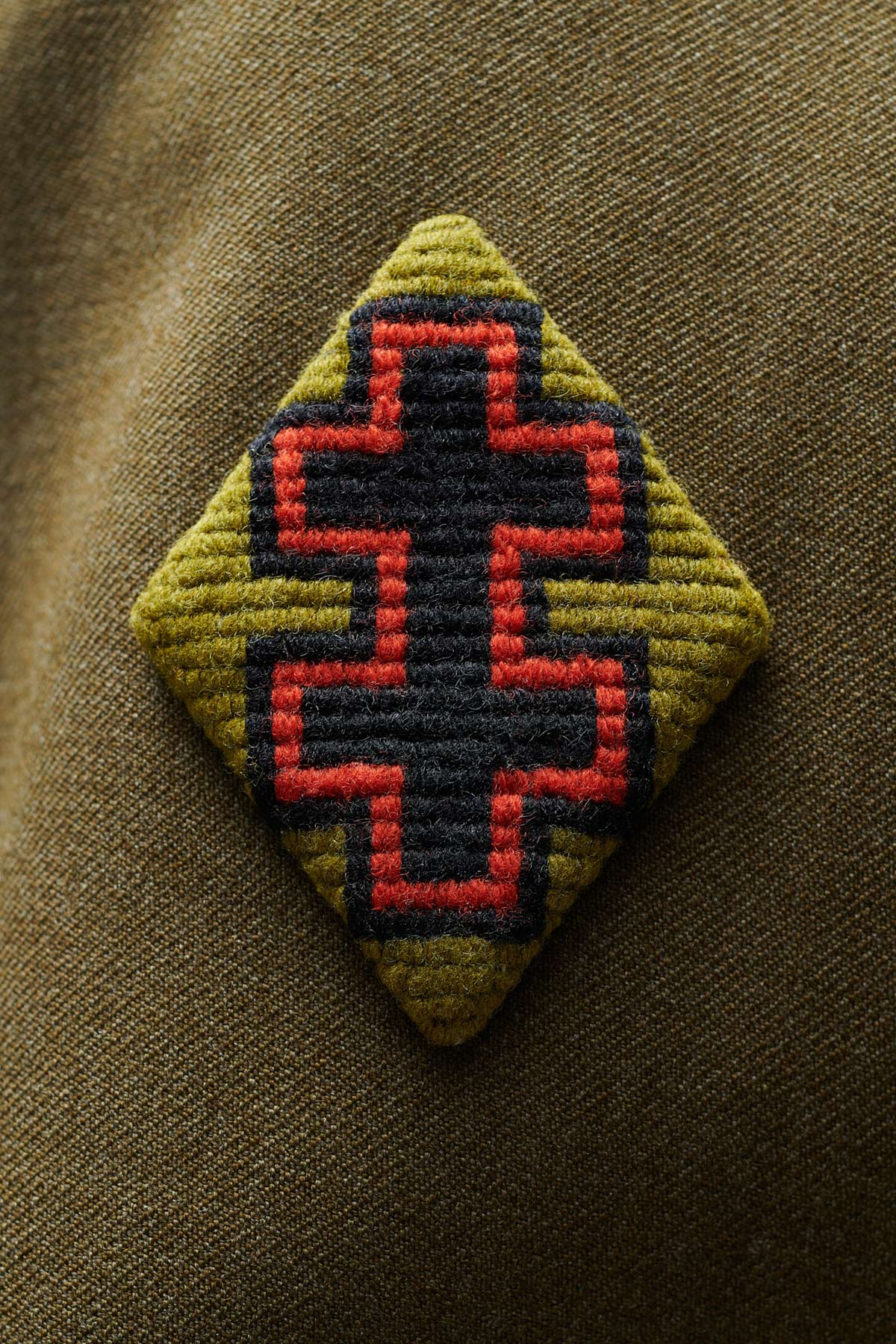
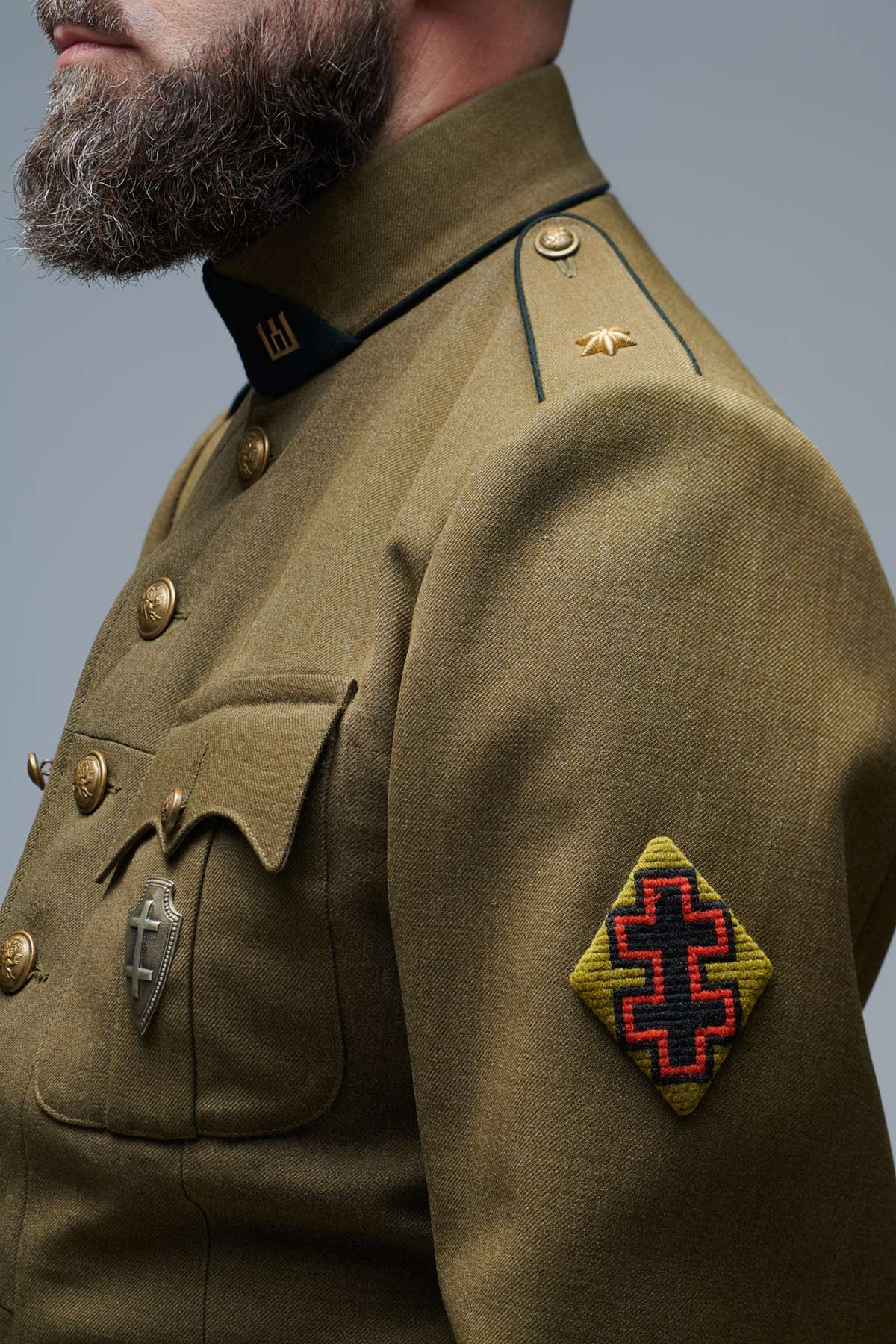
Partisan insignia Black vytis cross with red contour in diamond- shaped green back- ground, 1949
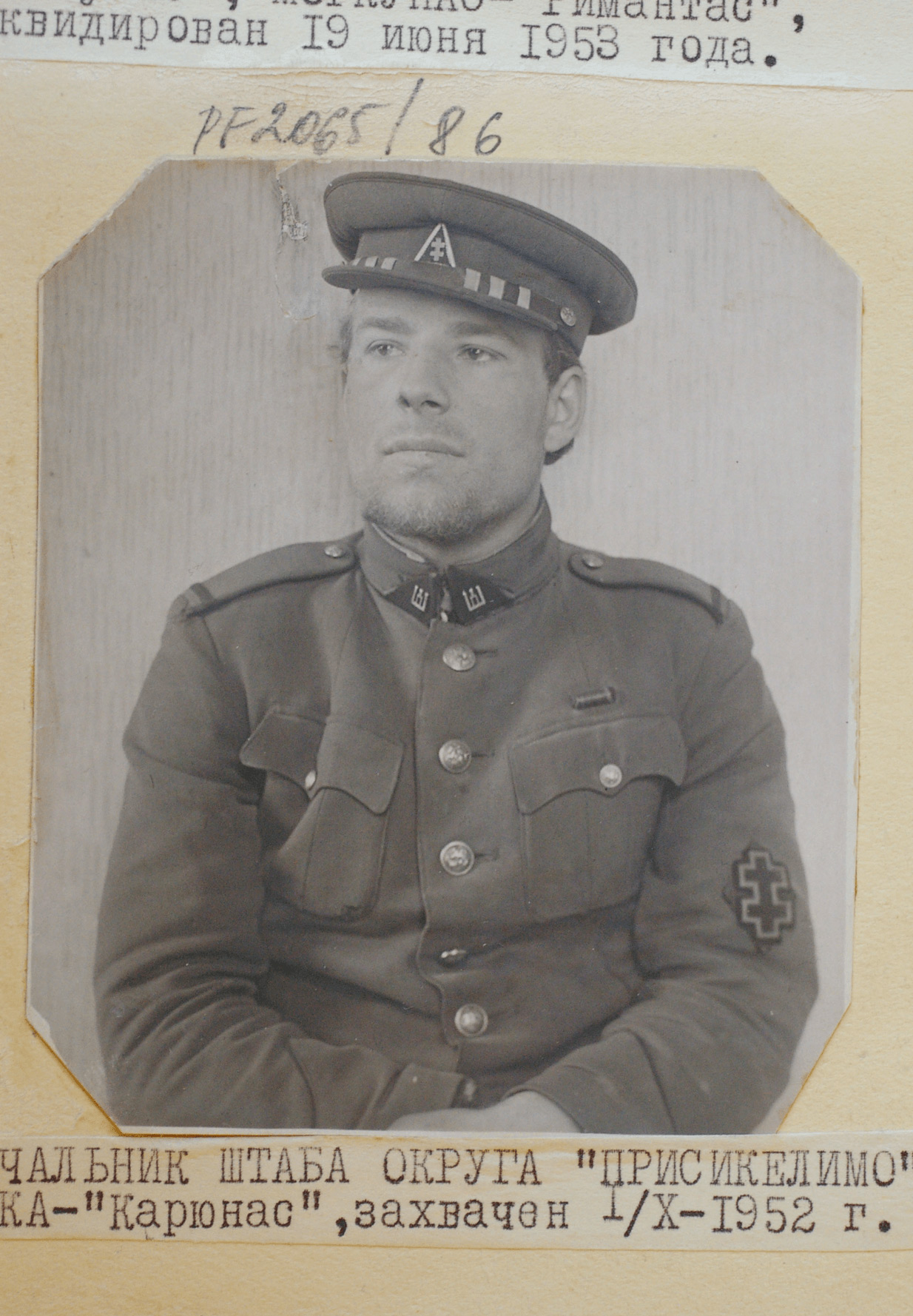
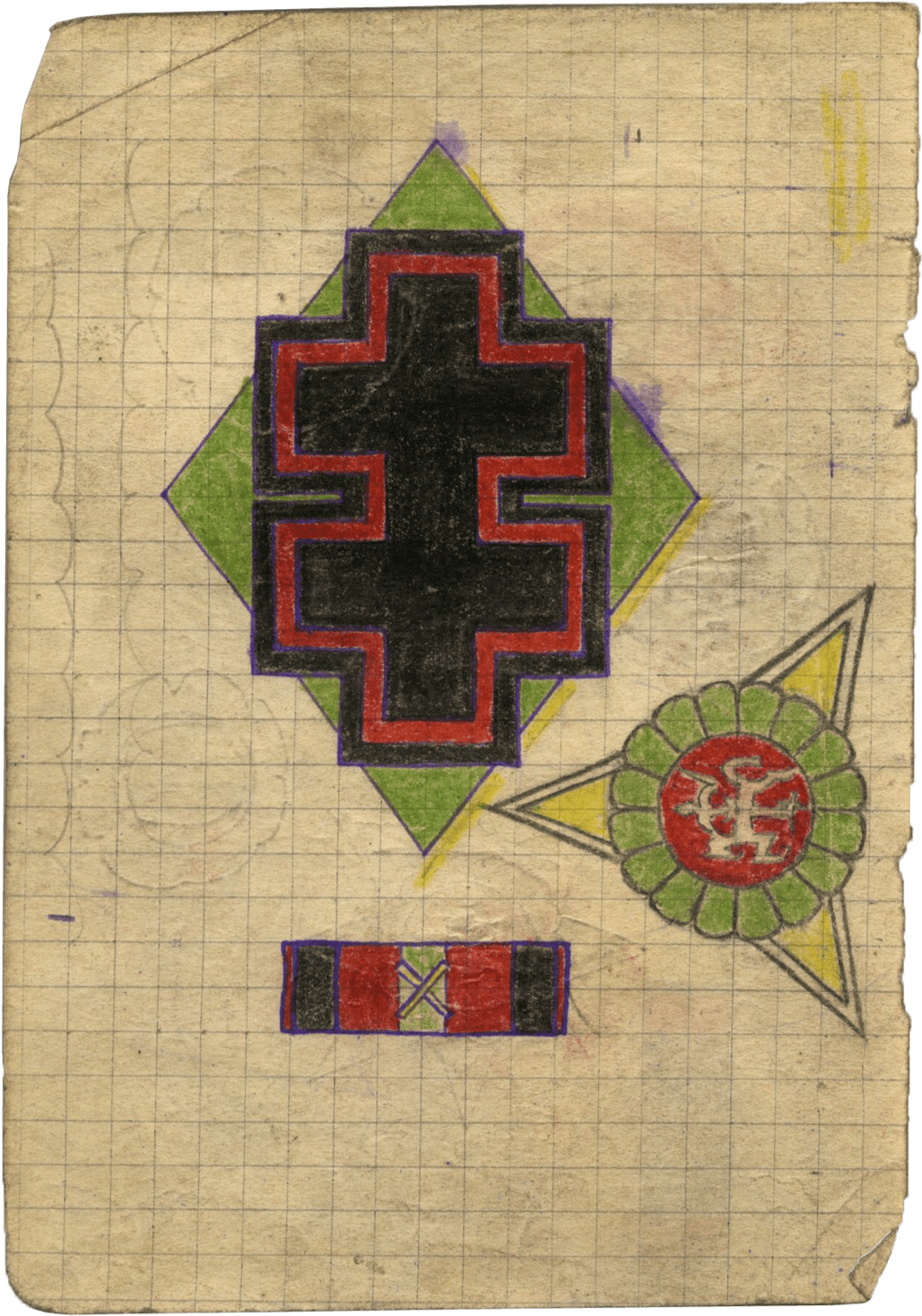
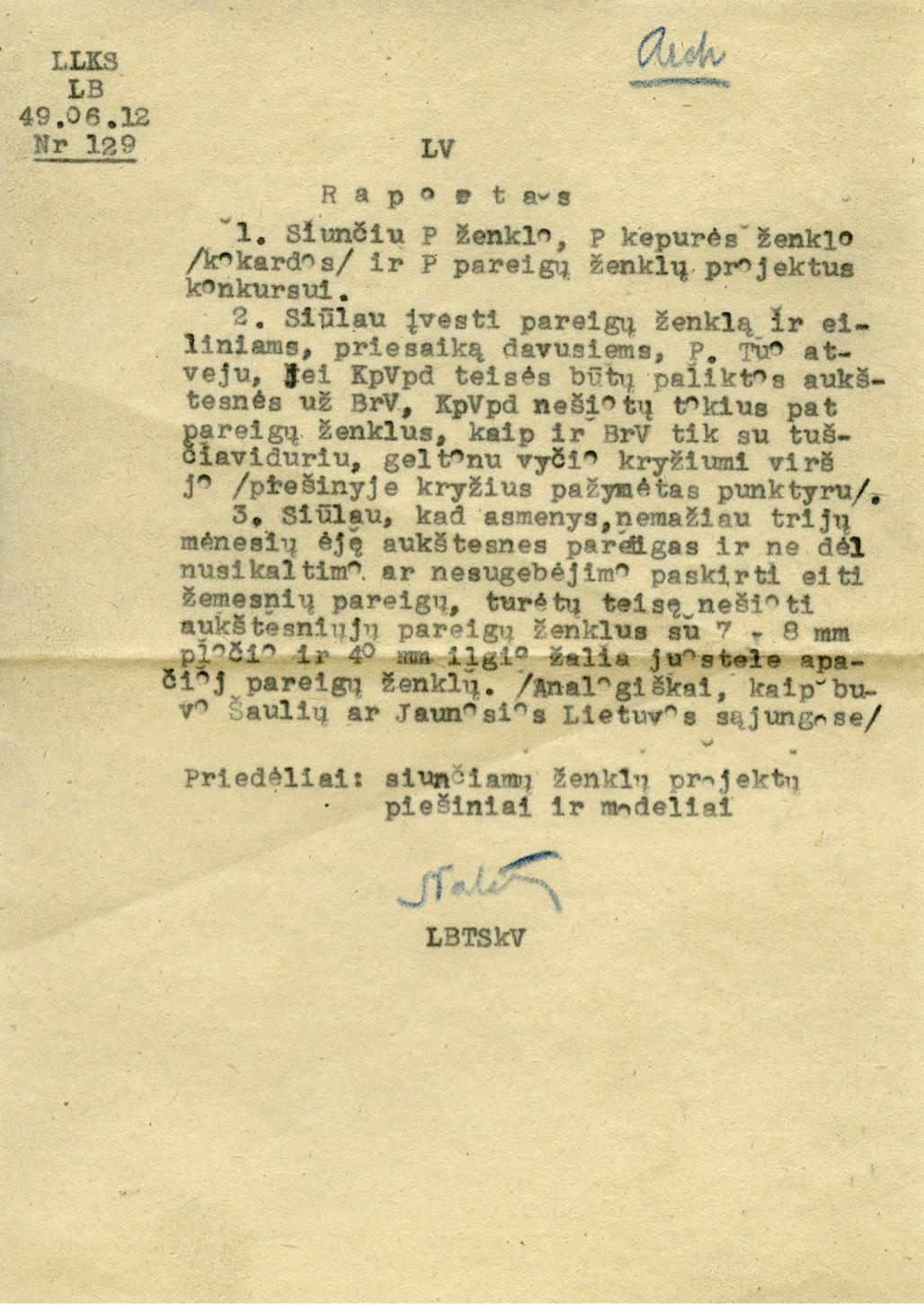
On August 1, after the customary minute of silence and reflection in honor of the fallen freedom fighters, the issues of further activities of the Public division and protection of the leadership were discussed in Užpelkiai: P. Bartkus criticized the title and content of the publication “Prie rymančio Rūpintojėlio” edited by J. Šibaila and B. Liesis. The most significant resolution of the meeting was related to the new insignia (cockade) of freedom fighters partisans, which until then had been used only by the Dainava district partisans, and the new partisan insignia, the design of which was prepared in June by B. Liesis in the Mumšilis forest bunker on the bank of the river Šušvė. After the death of the author, the latter sign was extensively described and explained by J. Šibaila (excerpt from the book “Lithuanian Partisan State” by Vykintas Vaitkevičius and Aistė Petrauskienė).
The Presidium of the Council of the Movement of the Struggle for Freedom of Lithuania (LLKS), held on August 1, 1949, was attended by the following members: Juozas Šibaila-Merainis, Leonardas Grigonis-Užpalis, Bronius Liesis- Naktis (the Night), Petras Bartkus-Žadgaila. During the meeting, the order on using unified symbols and insignia for all Lithuanian partisans was signed. The left sleeve was to be adorned with a black Vytis cross with red contour in diamond- shaped green background.
Green color symbolized the spirit of the Lithuanian country and the rise of the Movement of the Struggle for Freedom of Lithuania and reminded about the green forests that had for ages protected Lithuanians against their foes. The two connected triangles forming the insignia’s diamond mean “the highest lasting endurance of our nation”, where with one triangle the nation’s power rises towards the sky, while the other anchors it to its land (excerpt from the book “Lithuanian Partisan State” by Vykintas Vaitkevičius and Aistė Petrauskienė).
The Vytis cross served to remind about the Lithuanian greatness – the victory achieved during the Battle of Grunwald. The color black emphasized secrecy because “even to his parents, a partisan is the night.” The red color from the stylized Jagiellonian cross symbolizing blood sacrifice tells the partisans that this sacrifice becomes sacred greatness only when the fighters bring it to the nation’s altar by following the path of Christian morality (excerpt from the book “Lithuanian Partisan State” by Vykintas Vaitkevičius and Aistė Petrauskienė).
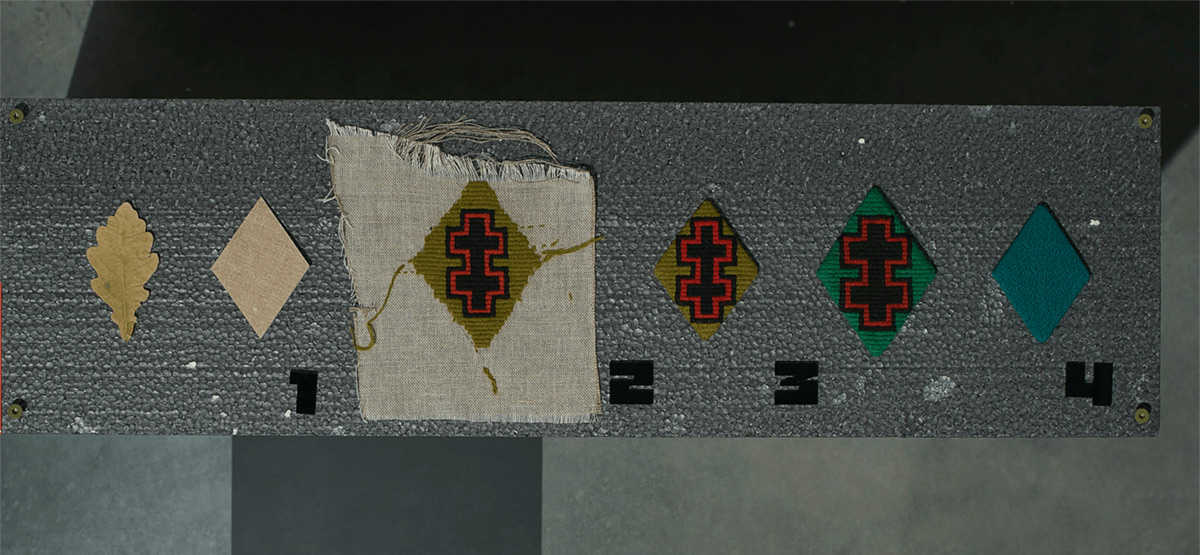
When intending to reconstruct the patch, Giedrius Paulauskas faced the question of how it had been produced. After inspecting the patch contained in the Museum of Occupations and Freedom Fights, a speculation was made that it had been woven. However, later it became clear that the patch had been embroidered using a unique technique. For reconstructing the patch, wool yarns that best reflected the period were chosen. Embroidery required great precision, so who made it for partisans? Their sweethearts? Signalwomen? A fighter who had no uniform would sew the patch on the sleeve of his civilian clothes. This emblem is one of the key proofs that the Lithuanian partisans were the Lithuanian armed forces.
EKS 07
Gallery

Officer’s greatcoat
LK EKS – 06
Jacket of the žemaičiai district partisans
LK EKS – 08